What does it mean to turn a city into a verb?
In Dubai's case, it means taking decades of speed, discipline, ambition, and delivery, then turning them into a way of working that people can understand, repeat, and carry forward.
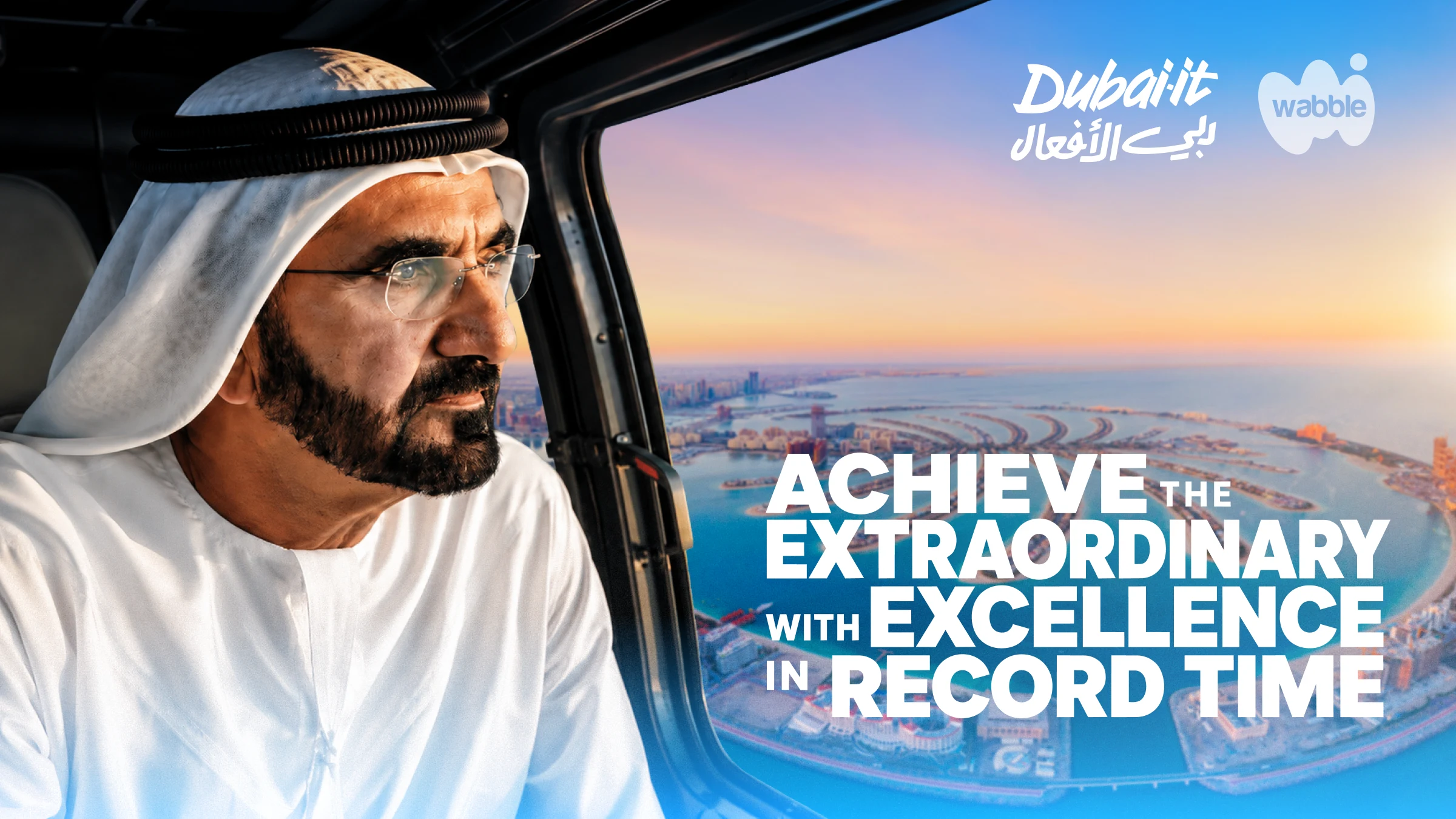
On June 17, 2026, His Highness Sheikh Mohammed bin Rashid Al Maktoum, Vice President and Prime Minister of the UAE and Ruler of Dubai, launched "Dubai-it", an initiative created to embed Dubai's work philosophy across its institutions, companies, and people. A clear statement that Dubai's success has never been accidental. There is a method behind it. Now, that method has a name.
More Than a Slogan
The world knows Dubai for its skyline, its records, and its speed. But "Dubai-it" looks beyond the visible achievements and points to the discipline behind them.
Sheikh Mohammed introduced the idea with a simple message: speed does not mean rushing, quality does not mean moving slowly, and ambition means little without execution.
That is the real weight of the initiative. Dubai-it is not about dreaming big for the sake of it. It is about turning big ideas into finished work. In a world full of vision statements, it puts the focus back on results.
Put simply, Dubai-it means achieving something extraordinary, with excellence, in record time. It is the same mindset that helped Dubai grow from desert landscape to global city within one generation.
A Philosophy Built for Action
The initiative is not meant to stay as a social media phrase or a government announcement. It will be carried across government institutions and companies in Dubai, with the goal of building a culture that is faster, sharper, and more accountable.
That matters because culture inside large organisations can be hard to shift. By giving this philosophy a name, Dubai has made it easier for teams to speak the same language.
When a team asks, "Did we Dubai-it?", the question is not about looking impressive. It is about whether the work was done properly, whether it was delivered fast, and whether the result was worthy of the standard Dubai has set for itself.
Why a Verb?
Turning "Dubai" into a verb is a strong choice.
It changes Dubai from a place you admire into a standard you can practise. It says that Dubai is not only a city, a brand, or a destination. It is also a way to work.
Other places are often known through adjectives: Swiss precision, Parisian elegance, Japanese craftsmanship. Dubai is reaching for something more active. It is saying that its way of building, deciding, and delivering can be used by anyone who is ready to hold themselves to that level.
There is also a generational message here. Dubai-it is meant to pass this work philosophy forward, so that the next generation does not only inherit buildings, roads, airports, and institutions. They inherit the discipline that made them possible.
Execution as Identity
The reason Dubai-it feels believable is that it is backed by a track record.
This philosophy was not created in a workshop or written for a campaign. It has already been lived through projects such as the Burj Khalifa, Emirates airline, the Dubai Metro, and Expo 2020.
Dubai has long worked with a direct promise: "We say what we do, and we do what we say." Dubai-it takes that idea and turns it into an operating standard for the future.
In many places, the pitch gets more attention than the product. The announcement gets more attention than the outcome. Dubai-it pushes in the opposite direction. It asks for work that is real, fast, excellent, and finished.
That same standard is becoming important for the companies being built in this region today. Wabble carries it in its own way, with a vision to help businesses reach financial intelligence faster, with sharper systems, better control, and a higher standard of execution. Not slowly. Not vaguely. But with the kind of clarity and pace that turns ambition into something useful, trusted, and built to last.